
You’ve probably been there, you spend hours crafting the perfect email, hit send… only for it to bounce back. Frustrating, right? It’s like a renowned painter finishing a masterpiece, only for no one to ever see it.
The good news? It’s preventable.
In this post, I’ll break down the different types of bounces (hard vs. soft), why they happen, and (most importantly) how to reduce them by cleaning your list before you send.
Verify your email lists with Findymail before you hit send, and keep your messages landing where they belong.
Email bounces damage your sender reputation, lower deliverability, and can eventually get you blocklisted. If your emails aren’t landing, nothing else matters.
The 3 Main Reasons Emails Bounce:
1. Soft Bounces: Temporary issues like full inboxes, large attachments, or server downtime.
2. Hard Bounces: Invalid, fake, outdated, or non-existent email addresses. These are the dangerous ones and directly hurt your sender reputation.
3. Blocklisting: High bounce rates, spam complaints, sudden volume spikes, or spammy content can land you on a blocklist — and getting off isn’t easy.
How to Stop Emails from Bouncing:
1. Warm up your inbox properly
2. Verify email addresses before sending
3. Remove invalid and unengaged contacts regularly
4. Avoid spam-trigger words and suspicious sending patterns
5. Keep your bounce rate below 5%
Bottom Line:
Great emails don’t fail because of bad copy, they fail because they never get delivered. Clean your list, verify before you send, and protect your deliverability before you scale.
What Is a Bounce, and How Often Do They Happen?
An email bounce occurs when your message can’t be delivered to a recipient. When that happens, your email service provider notifies you with the technical reason for the failure.
The problem? Bounces don’t just affect one email, they hurt your sender reputation and increase the chances of future emails landing in spam folders.
How Often do Email Bounce Backs Happen?
Bounce rates can vary widely, but the average varies between 26-70%. Some cold outreach professionals think anything under 40% is acceptable, but I beg to differ.
If you’re serious about deliverability, you should aim to keep your bounce rate below 20%. That’s the standard serious cold email operators should hold themselves to.
The Three Key Reasons Why Emails Bounce
There are three types of email bouncebacks:
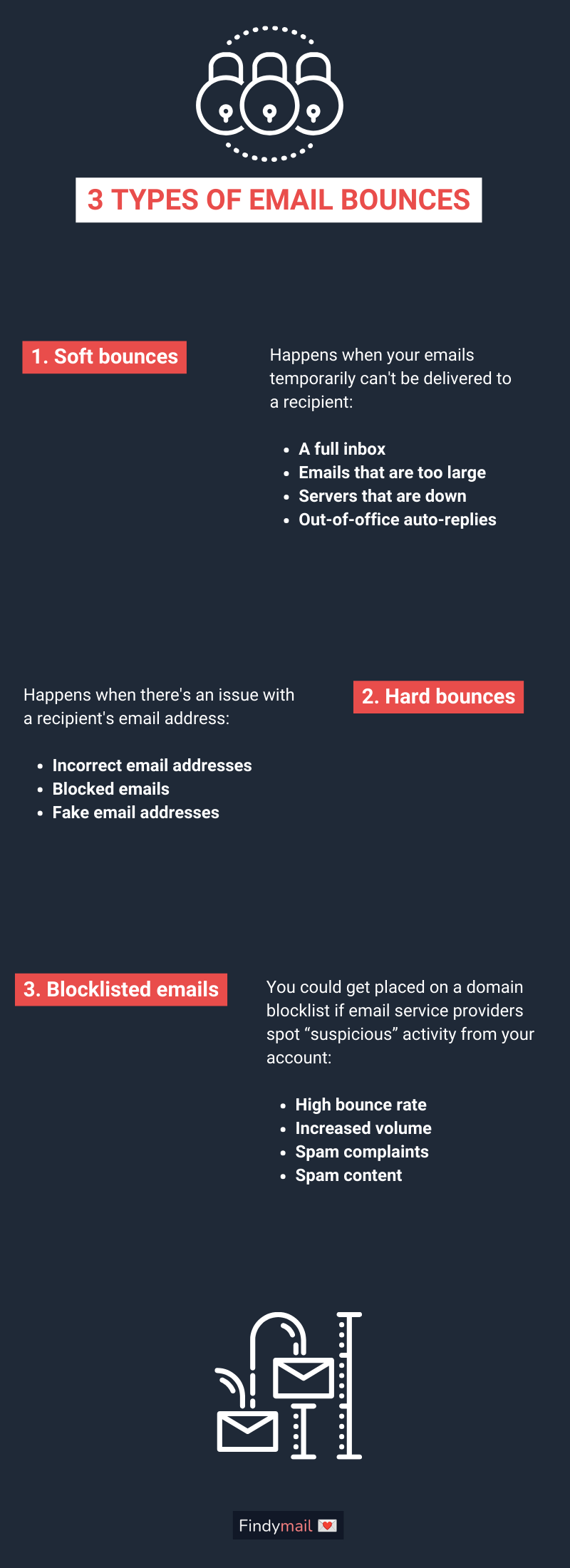
1) Soft Bounces
A soft bounce happens when your emails temporarily can't be delivered to a recipient.
It's important to remember that soft bounces don't happen because there's an issue with a recipient's email address. Since this is only temporary, soft bouncebacks are often fixed relatively quickly, and many email providers will try to resend the emails.
Some of the reasons why your emails might soft bounce include the following:
- A full inbox: When a recipient's inbox is full, your emails keep bouncing until they free up space.
- Emails that are too large: A recipient's inbox often has a filter that prevents large emails from being delivered. You'll get soft bounces when you send emails with large attachments to these recipients.
- Servers that are down: When the recipient's email server is down, your emails will bounce, and you'll need to send them later to get them delivered. This downtime can be for various reasons, from server maintenance to crashes.
- Out-of-office auto-replies: When someone goes on holiday or is out of the office for some time, they usually set up an auto-reply. When they do, your emails to them will often bounce.
2) Hard Bounces
Unlike soft bounces, hard bounces happen when there's an issue with a recipient's email address.
This usually means the address is invalid, inactive, non-existent, fake, or the domain has expired. The real problem? Hard bounces aren’t fixable. And if they pile up, your sender reputation tanks — putting you on the fast track to being blocklisted.
The only way to prevent them is simple: remove hard-bounced addresses immediately and verify emails before you send. Some of the reasons hard bounces happen include:
- Incorrect email addresses: The biggest cause of hard bounces is bad data: typos, outdated contacts, or purchased lists (big no-no). Always verify your lead lists before you hit send, especially if it’s aging or came from a third party.
- Blocked emails: Some email providers and domains use strict spam filters that can block your messages entirely. Encourage recipients to add you to their contacts, and properly warm up your inbox to avoid being flagged for suspicious sending behavior.
- Fake email addresses: Fake emails are another major cause of hard bounces. This usually happens when people enter bogus addresses to access gated content or join your list.
3) Blocklisted Emails
Here’s the not-so-fun part about hard bounces: stack up enough of them, and your domain can end up in blocklist jail.
So what does that actually mean? Spam is a massive problem, and to protect users, email providers rely on blocklists. If your domain or IP shows signs of suspicious activity, you can be added to one — and once you’re on it, your emails may stop reaching the inbox altogether.
Some providers maintain their own internal blocklists, while others rely on public ones. Either way, getting removed can take time and seriously damage your outreach. The smarter move? Avoid getting blocklisted in the first place.
Easier said than done, so here’s how providers detect “suspicious” activity:
- High bounce rate: Frequent bounces signal poor list hygiene or spammy behavior. Regularly remove invalid addresses and verify your data before sending.
- Increased volume: If you suddenly blast thousands of emails, providers may assume you bought a list or are spamming. Gradually scale volume and properly warm up new domains.
- Spam complaints: If recipients mark your emails as spam, providers will take notice. Personalization and accurate targeting go a long way here.
- Spam content: Overusing spam-trigger words, excessive links, or poor formatting can push your emails into spam — or worse, onto a blocklist.
How to Prevent Email Bouncebacks
Some emails will bounce, and that’s normal. However, don’t use the “spray and pray” approach for cold outreach. Instead, follow the next steps to set yourself up for success and prevent damage:
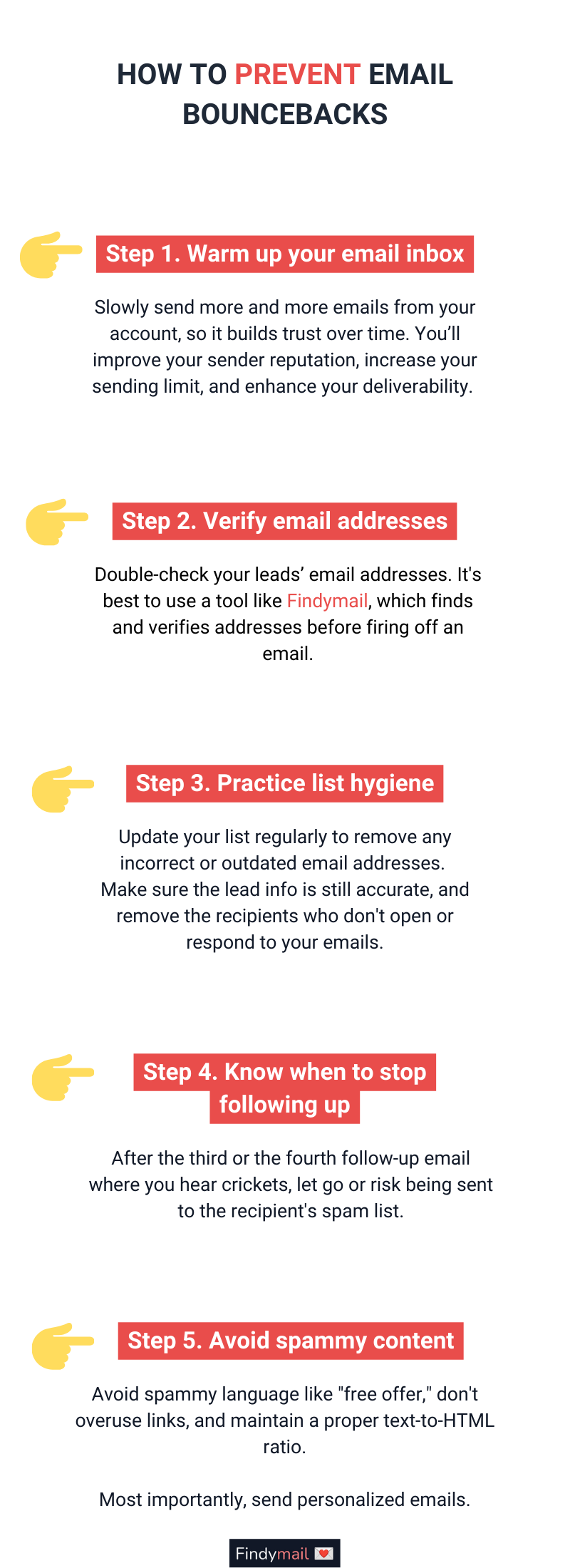
Step 1. Warm Up Your Email Inbox
One of the first strategies you should implement to prevent email bounces is to warm up your email. This means you slowly send more and more emails from your account, so it builds trust over time. You’ll improve your sender reputation, increase your sending limit, and enhance your deliverability.
You can do it manually or use email warmup tools that have your inbox interacting with other inboxes so the service providers understand you’re a legitimate account.
Step 2. Double-Check Email Addresses
It's vital that you double-check your lead's email addresses. As mentioned earlier, your emails will bounce if an email address is incorrect, invalid, or non-existent.
Depending on your circumstances, you can do this manually or use Findymail's email checker to ensure they're safe to use.
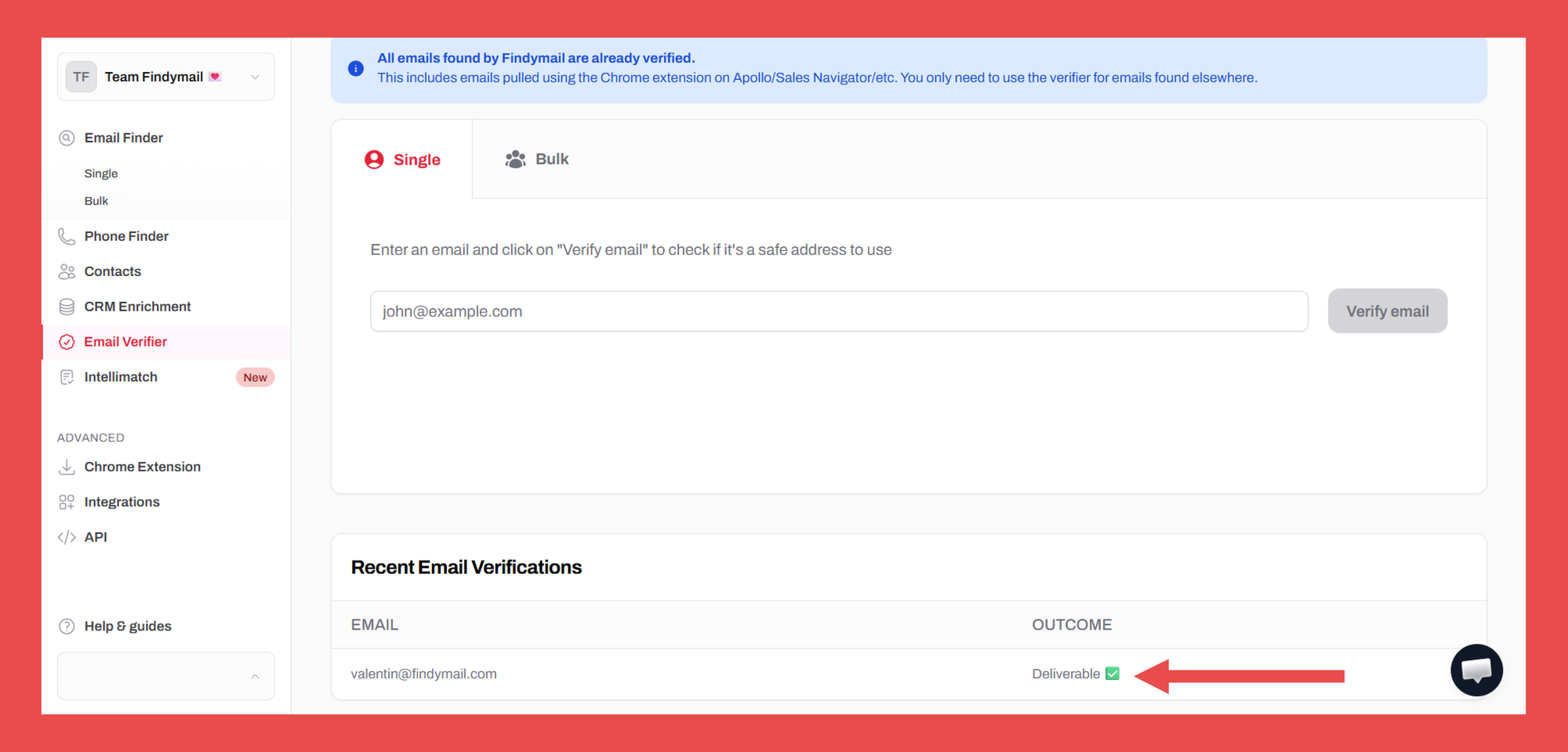
Enter the email address, and Findymail will tell you if it’s safe! Plus, our Chrome extension can help you track down email addresses while browsing .
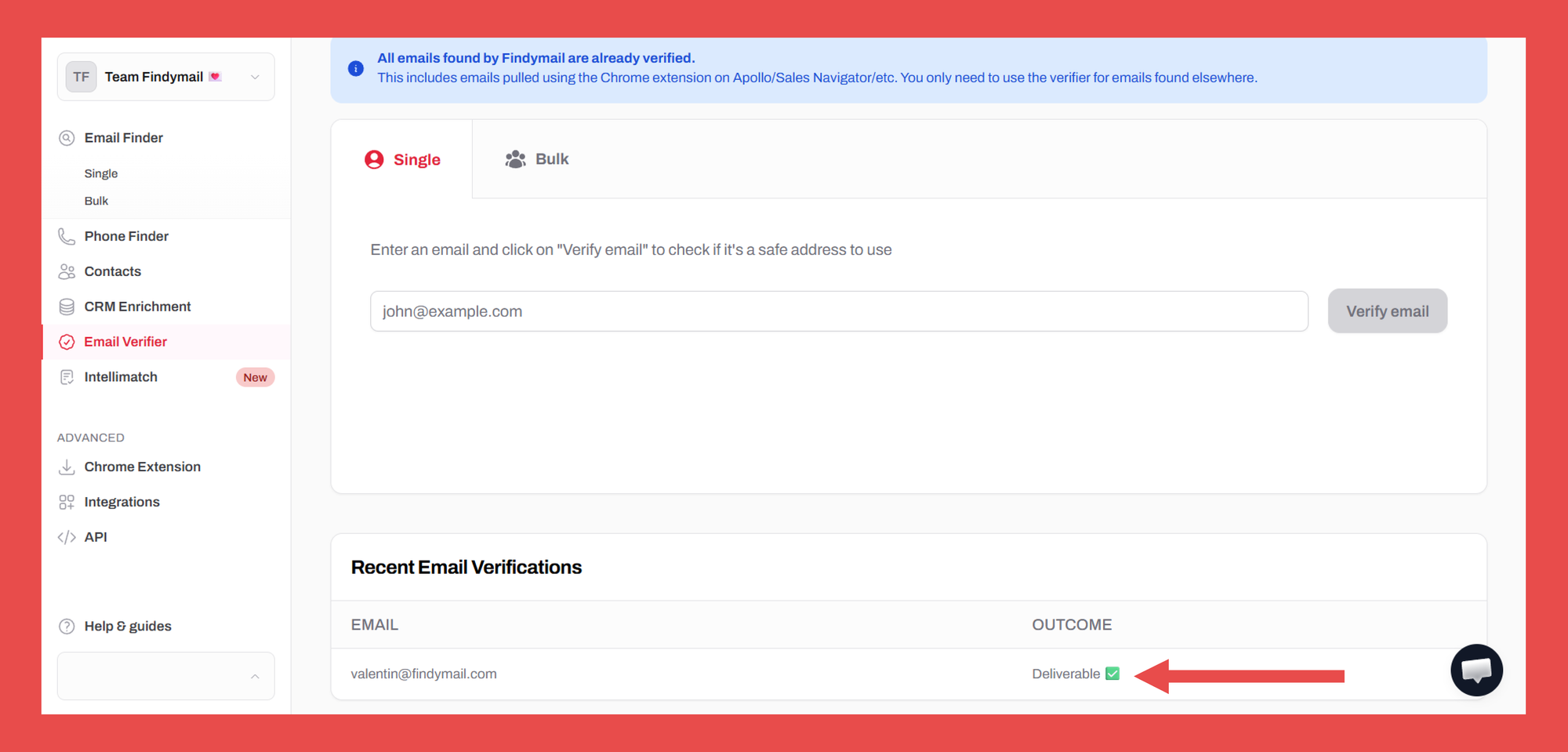
I recommend doing this even if you got your lead contact info from a big B2B contact database. Since they don’t regularly refresh the information, some of your leads may have quit and moved on to different positions, so your emails could land in a catch-all inbox or bounce – both, are equally bad.
Step 3. Practice Good List Hygiene to Reduce Email Bouncebacks
Consistent list maintenance is non-negotiable. Make it a habit to:
- Remove any incorrect or invalid email addresses.
- Make sure your lead information is still accurate (or use a data enrichment service).
- Remove those email addresses of recipients who don’t open your emails or respond.
The cleaner your list, the higher your deliverability, and the lower your bounce rate.
Another smart move? Segment and score your leads. Start by engaging your warmest prospects first. Higher engagement improves your sender reputation and builds credibility with email providers. Once you’ve established trust, you can keep working the sales pipeline with colder leads.
Step 4. Follow-ups Are Good but Know How to Take a Hint
I’m a big fan of a good cold email follow-up, but even I know that when a lead isn’t responding or opening your emails after the third or fourth time you’ve messaged them, it’s time to take the hint and take them off the list.
Otherwise, they could get annoyed and start marking your emails as spam; a one-way ticket to the blocklist.
Step 5. Avoid Spam Content
I already mentioned earlier that spam content could lead to hard bounces. But what does that mean exactly?
- Avoid spammy language (yep, sometimes even phrases like “free offer” can trigger the spam filters).
- Avoid the overuse of links in your emails.
- Maintain a proper text-to-HTML ratio.
Most importantly, to avoid spam content, send personalized and relevant emails. You can even use spintax to randomize your email content while keeping it relevant to your specific audience.
Get Your Emails into Inboxes Now!
The effectiveness of your email campaigns depends on whether recipients open your emails. However, for them to open your emails, they have to be delivered first. This is why unnecessary bounces are so devastating - especially since you can prevent them in a few simple steps:
- Warm up your cold outreach inboxes
- Verify email addresses
- Avoid triggering the spam filters
- Take the disinterested prospects off your mailing list
It’s that simple and leads to much, much higher deliverability!
Verify your emails with Findymail, keep your bounce rate under 5% (guaranteed) and and stay out of blocklist jail for good.

Valentin
Valentin Wallyn is the founder and CEO of Findymail, a SaaS platform he launched to help B2B teams discover accurate email and contact data and automate data enrichment at scale. With an IT background, Valentin combines a technical mindset with hands-on experience in outreach and growth. His work centers on improving data quality and prospecting efficiency, drawing on years of entrepreneurial experience and a deep understanding of what makes outreach campaigns succeed.